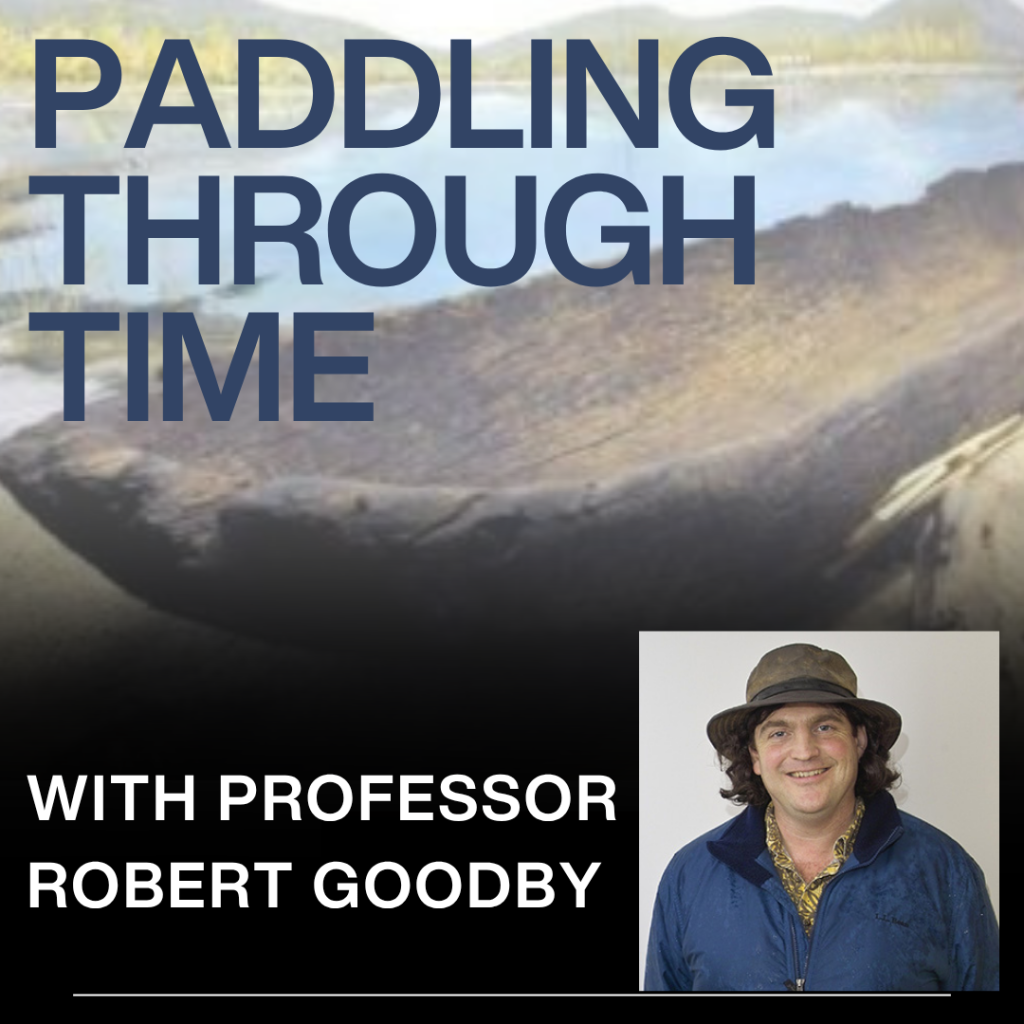
Paddling Through Time - The Long History of Canoes in New England
Saturday, December 12, 2026 · 2:00 PM – 3:30 PM
Tufts Library — 46 Broad St., Weymouth, MA
For thousands of years, canoes were central to the lives of Native Americans in New England. Travel by canoe connected people within and between the major watersheds, creating social and economic alliances and distributing scarce resources to far-flung communities linked by ties of kinship and common culture. European settlers, traders, and explorers adopted Native canoe technology in the 17th and 18th centuries, and a few dozen dugout canoes have since been recovered from the murky bottoms of ponds and lakes across northern New England. Join archaeologist Dr. Robert Goodby to discover what we’ve learned from these recovered canoes, including many that have only recently been carbon-dated. Robert Goodby is a professor of Anthropology at Franklin Pierce University in Rindge. He holds a Ph. D. in anthropology from Brown University and has spent more than thirty years studying Native American archaeological sites in New England. He is a past president of the New Hampshire Archeological Society, a former Trustee of the Mount Kearsarge Indian Museum in Warner, and served on the New Hampshire Commission on Native American Affairs. In 2010, he directed the excavations of four…
Free to attend. Up to age 0.
More events at Tufts Library
- WCFCE Storytime/Playgroup — Monday, November 30, 2026 · 9:30 AM – 10:30 AM
- Bookstore Open — Monday, November 30, 2026 · 10:00 AM – 8:00 PM
- Comic Club for Tweens — Monday, November 30, 2026 · 5:15 PM – 6:00 PM
- Baby Butterflies — Tuesday, December 1, 2026 · 9:30 AM – 10:00 AM
- Bookstore Open — Tuesday, December 1, 2026 · 12:00 PM – 8:00 PM
- Teens: Snowflake Making — Tuesday, December 1, 2026 · 3:00 PM – 4:00 PM
- Tween Pokémon Club: Poké Catch — Tuesday, December 1, 2026 · 5:30 PM – 6:30 PM
- Bookstore Open — Wednesday, December 2, 2026 · 10:00 AM – 8:00 PM
- Story Hour and Craft with ECP and JRC — Wednesday, December 2, 2026 · 6:30 PM – 7:30 PM
- Baby Butterflies — Thursday, December 3, 2026 · 9:30 AM – 10:00 AM
- Bookstore Open — Thursday, December 3, 2026 · 10:00 AM – 8:00 PM
- Weekly In Stitches Fiber Arts Club — Thursday, December 3, 2026 · 6:00 PM – 7:30 PM
Other upcoming events in Weymouth
- Fogg Library Open 9 AM - Noon — Saturday, October 24, 2026 · 9:00 AM – 12:00 PM
- 🎃 Fogg Library Open 9 AM - Noon — Saturday, October 31, 2026 · 9:00 AM – 12:00 PM
- Baby Butterflies at Fogg — Thursday, December 3, 2026 · 1:30 PM – 3:00 PM
- Primary Pals : Building — Thursday, December 3, 2026 · 4:00 PM – 4:45 PM
- Drop In Holiday Craft — Tuesday, December 8, 2026 · 1:30 PM – 2:30 PM